We’ve been providing home comfort solutions for over 45 years!
Launched in June of 2010, ExpressOverstock.com was developed from our experience of over 45 years as an HVAC contractor. We have been buying and selling new and unused overstocked and surplus inventories since 1992—shipping all over the US.
We continue to provide premium-branded HVAC systems, single component products and equipment at the best price to you. Our site is an alternative option for consumers to purchase HVAC equipment at lower prices than most traditional dealers or contractors can provide.
We know that purchasing a new or replacement AC system or component is a considerable investment for you, which is why we’ve geared our site toward helping you feel comfortable in choosing the right system or component at the right price to fit your need.
With our concept, you can experience even greater savings when electing to locate your own professionally trained and licensed technician to help you with your installation and service. We have a growing ANSeRs network of Service Centers who can provide warranty, service and maintenance and installs—ask to see if we have one in your area.
Take advantage of our unique buying position by purchasing your next HVAC system or component from ExpressOverstock.com today!
Get your furnace ready now and stop winter energy bills before they start.
20–30%of heat lost through leaky ducts
10%saved per year with smart thermostat habits
15–20 yrsaverage gas furnace lifespan
When the temperature outside starts dropping, the last thing you want is to flip on the heat and get nothing. For homeowners in cold climates, a home heating system that fails in November or January is not just uncomfortable — it can be dangerous and extremely expensive to fix under pressure. The good news is that a few proactive steps this fall can protect your family all winter, keep your energy bills under control, and help you avoid the emergency repair costs that catch most homeowners off guard.
Your Fall Heating Checklist at a Glance
1
Test your heating system now
2
Replace your furnace filter
3
Seal air leaks and drafts
4
Program your thermostat for winter
5
Inspect ductwork and vents
6
Know when to replace your system
7
Choose Carrier for cold-climate reliability
Don't wait for the first freeze. Shop Carrier gas furnaces and gas-electric split systems in stock and ready to ship now at ExpressOverstock.com.
STEP 1 Turn the Heat On Now and Test Your Home Heating System Before You Need It
The single most overlooked fall task is also the simplest: turn your furnace on before the cold arrives and actually let it run. Most homeowners wait until the first genuinely cold night, at which point any problem becomes an emergency. Do this in early October when HVAC technicians are available and parts are in stock.
Run your system for at least 30 minutes and walk through every room. Air should come out of all vents evenly and at a consistent temperature. A brief burning smell during the first run is normal — dust burning off the heat exchanger — but a persistent odor or the smell of gas means you should shut the system off and call a professional immediately.
Listen for unusual sounds: banging, squealing, or rattling that wasn't there last winter means something has come loose or worn out. Catching a mechanical issue now rather than in December, when HVAC demand is at its peak, keeps repair costs manageable and your home heating system reliable when you need it most.
Pro tip: Write down the date of your test run and any sounds or smells you notice. It helps your technician diagnose problems faster and track how your system changes year over year.
Test run revealed a problem? Browse our full selection of Carrier gas furnaces — in stock and ready to ship before winter hits.
STEP 2 Replace Your Filter and Check Furnace Efficiency Before Heating Season Begins
A dirty air filter is the number one cause of furnace inefficiency. Filters should be replaced every 30 to 90 days, but after a full summer of AC cycling, the filter going into fall is often far dirtier than homeowners expect. A clogged filter restricts airflow, forces your furnace to work harder, and drives up your monthly energy bill immediately.
For homes in dusty climates or with pets, consider upgrading to a MERV-11 or MERV-13 rated filter this fall. Higher-rated filters capture more particulates and help reduce the allergens and dust that circulate when you close up your home for winter. Better air quality and better system efficiency in one step.
While the filter panel is open, check the furnace cabinet for signs of corrosion or visible damage to the heat exchanger. A cracked heat exchanger is a serious safety issue because it can allow carbon monoxide to enter the living space. If anything looks wrong, contact a licensed HVAC technician immediately rather than running the system through the winter.
Time for a real upgrade? Shop our Carrier high-efficiency gas furnaces at 80% and 96% AFUE ratings — more heat, lower bills all winter.
STEP 3 Seal Air Leaks Around Your Home to Maximize Heating System Performance
Even the best furnace on the market cannot keep up with a home full of air leaks. Cold-climate homeowners lose a significant portion of their heating energy through drafty windows, unsealed door frames, gaps around electrical outlets on exterior walls, and unsealed penetrations where pipes and wires enter the house. Addressing these before temperatures drop is one of the highest-return investments you can make.
Walk around your home with a stick of incense or a candle on a windy fall day and hold it near window edges, door frames, and outlets on exterior walls. Any flickering tells you exactly where conditioned air is escaping. Caulk and weather stripping are inexpensive and easy to apply, and the savings on your heating bill can pay back the cost in weeks in a cold climate.
Don't forget the attic hatch. In many homes, the attic access panel is uninsulated and unsealed, allowing warm air from the living space to pour directly into the cold attic all winter. A simple attic hatch cover or foam gasket kit eliminates this loss and noticeably reduces how often your home heating system has to cycle on.
A tighter home is a more efficient heating season. Shop Carrier gas-electric split systems — one matched package for heating and cooling year-round.
STEP 4 Program Your Thermostat for Winter to Cut Heating Costs Without Sacrificing Comfort
Your thermostat settings have a bigger impact on your heating bill than most homeowners realize. The U.S. Department of Energy recommends setting your thermostat to 68°F when you're home and awake during winter, and lowering it by 7 to 10 degrees when you're away or sleeping. That single habit can reduce your heating costs by up to 10 percent per year.
If you're still using a manual thermostat, fall is the right time to upgrade to a programmable or smart model. Smart thermostats learn your patterns, adjust automatically, and can be controlled from your phone, so you can warm the house up before you arrive home rather than heating an empty space all day.
In very cold climates, avoid the temptation to crank the thermostat up high on cold mornings. Your home heating system heats at a fixed rate regardless of the set temperature, so a higher setting just means the system runs longer, not faster. Setting it realistically and letting it run efficiently is always the better approach.
Winter setting cheat sheet: Home and awake: 68°F. Away or asleep: 60–61°F. Each degree lower saves roughly 3% on your heating bill.
A smart thermostat is only as good as the system behind it. Pair it with a high-efficiency Carrier furnace and take control of your heating costs all winter.
STEP 5 Inspect Your Ductwork and Vents to Prevent Heat Loss Before the Cold Hits
Leaky ductwork is one of the most expensive and least visible problems in a home heating system. The EPA estimates the average home loses 20 to 30 percent of heated air through duct leaks before it ever reaches the living space. That means your furnace might be working hard but only delivering 70 percent of its output to the rooms you're actually trying to heat.
Walk your basement, crawlspace, or attic and look for disconnected duct sections, visible gaps at joints, or duct tape that has dried and cracked. Metal foil tape or mastic duct sealant are the proper fixes. While you're down there, check that any ducts running through unheated spaces like a garage or attic are insulated to prevent heat loss through the duct walls themselves.
Also make sure all supply and return vents inside the home are open and unobstructed. Closing vents in unused rooms actually increases static pressure in the system and forces the furnace to work harder, not less. Keeping all vents open lets your home heating system distribute heat evenly and operate at the efficiency it was designed for.
Tight ducts and a high-efficiency furnace win every cold winter. Shop Carrier gas furnaces and gas-electric split systems — in stock and priced to move this fall.
STEP 6 Know When to Replace Your Home Heating System Before Winter Forces Your Hand
Fall is the ideal window to replace an aging furnace, and if you're already thinking about it, don't wait. HVAC technicians are busiest in summer and the dead of winter, so scheduling a replacement in October or November means shorter lead times, more installer availability, and in many cases better equipment pricing before winter demand drives it up.
The average gas furnace lasts 15 to 20 years. If yours is in that range and has required repairs recently, the math almost always favors replacement. A system running at 80% AFUE or below costs significantly more per heating season than a modern 96% AFUE condensing furnace. The energy savings on a high-efficiency upgrade can be substantial in cold climates where the furnace runs hard for five or more months a year.
Use the "5,000 rule" to decide: multiply the age of the unit by the estimated repair cost. If the number exceeds $5,000, a new system is almost always the smarter investment. We carry a great selection of Carrier furnaces and gas-electric heating systems ready to ship, so you can be installed and running well before the first hard freeze.
The 5,000 Rule
Age of System × Repair Coste.g. 14 years × $420 repair = $5,880 → Replace
✗
Over $5,000 — Replace the system
✓
Under $5,000 — Repair may be worth it
Fall is the best time to replace — before winter prices and delays hit. Browse Carrier gas furnaces and split systems with fast shipping to the lower 48 states.
STEP 7 Why Carrier Is the Best Home Heating System for Cold Climates
When winters are serious, the brand behind your heating system matters. Carrier invented modern air conditioning over a century ago and has never stopped engineering systems built to perform under real-world demand. Their furnaces are known for quiet operation, consistent heat output, and long-term durability in climates where the system runs hard for months at a time.
Carrier's gas furnace lineup spans from dependable 80% AFUE models for budget-conscious upgrades to premium 96% AFUE condensing furnaces that extract nearly all available heat from every unit of gas burned. For homeowners in the coldest climates, the Carrier Infinity series adds variable-speed blower technology that maintains precise temperatures with far less cycling — meaning more consistent warmth and lower energy bills through an entire heating season.
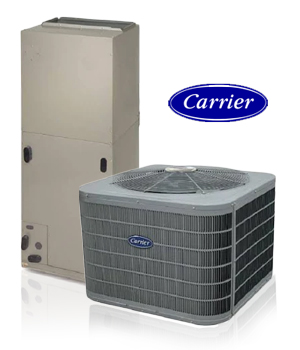
For homeowners who want a single system that handles both heating and cooling year-round, our Carrier gas-electric split systems combine a high-efficiency gas furnace with a central air conditioner in one matched package. At ExpressOverstock.com, we carry a great variety of Carrier heating options at competitive prices with free shipping to the lower 48 states — your new system arrives fast and ready to install before the cold closes in.
Carrier is the name cold-climate homeowners trust. Great variety, unbeatable pricing, and fast shipping nationwide.
Winter doesn't give you a warning when it arrives. The homeowners who stay warm and keep their energy bills under control are the ones who take care of their home heating system in the fall — before the cold makes every problem urgent and every repair expensive. A few hours of preparation now can save you thousands of dollars when the temperature drops. And when it's time for a new system, ExpressOverstock.com has the Carrier inventory, the pricing, and the fast shipping to get you ready before winter hits.
Don't Let Winter Catch Your Home Off Guard.
Shop our complete selection of Carrier gas furnaces and gas-electric heating systems, in stock and ready to ship. We carry a great selection so you stay warm all season long.